At the beginning of October, we finally finished fixing the barn wall and were able to focus more on the horses instead of just turning them out every day. We decided to start trotting hills to help Diesel get back in shape and to strengthen Stinger’s stifles. We were ponying them up the hill with the side by side when it was too muddy in our arena. Both horses seemed to really like it, although Stinger was struggling with the hill, where we almost thought he looked lame.
Angus was still in training at the time and Diesel was still in the new stall. Through the summer we had thought it would be beneficial for Stinger to have a small paddock to run in and out of every day to help avoid his locking stifle, but we didn’t have a second one for him to use. Since Diesel was still not back to being out all day/night, we had an idea to put Stinger in his stall and see how his leg does with the constant movement.
The first night wasn’t good, when he was fed in the morning, he seemed really tense and sore. Although he seemed to work it out throughout the day and was running and playing in the pasture. When we went to feed that night, he was running at me in the pasture and then did a rollback away from me and seemed to hold his leg up for a second, but then kept going. We put him back in his original stall and the next morning his right hock was swollen, and he was lame. I alternated between cold hosing it, putting liniment and poultice on it to get the swelling down. He seemed a little better at the walk, but he was completely lame at the trot. We kept him on stall rest with hand walking for two weeks with little improvement and then made a vet appointment.
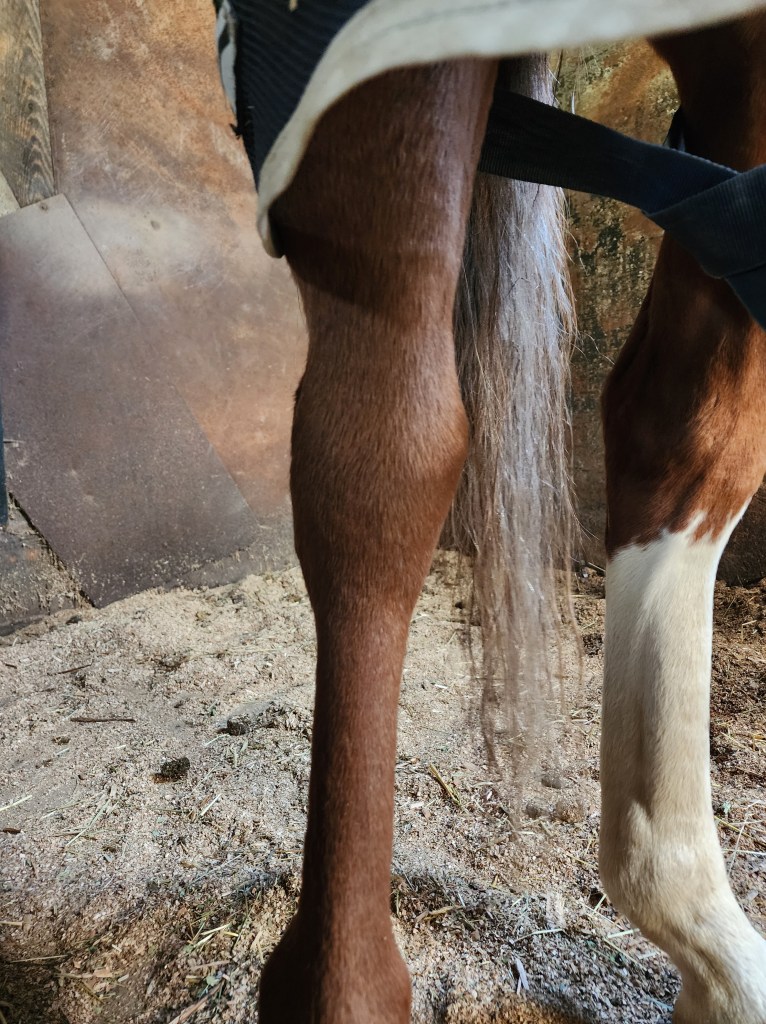
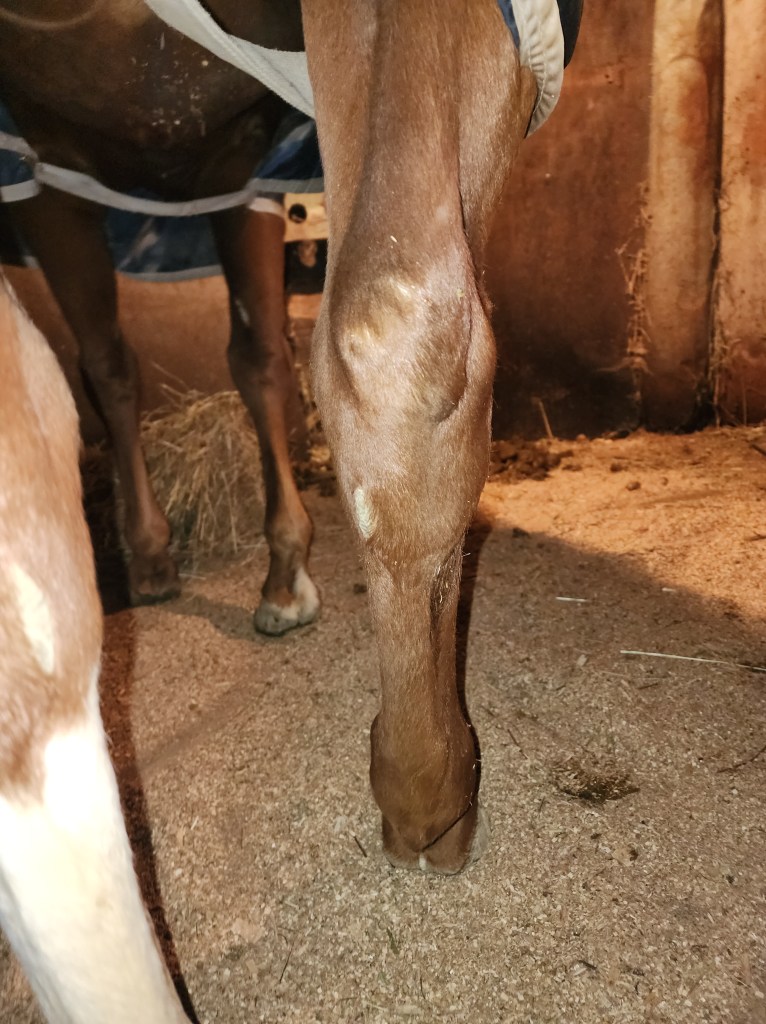
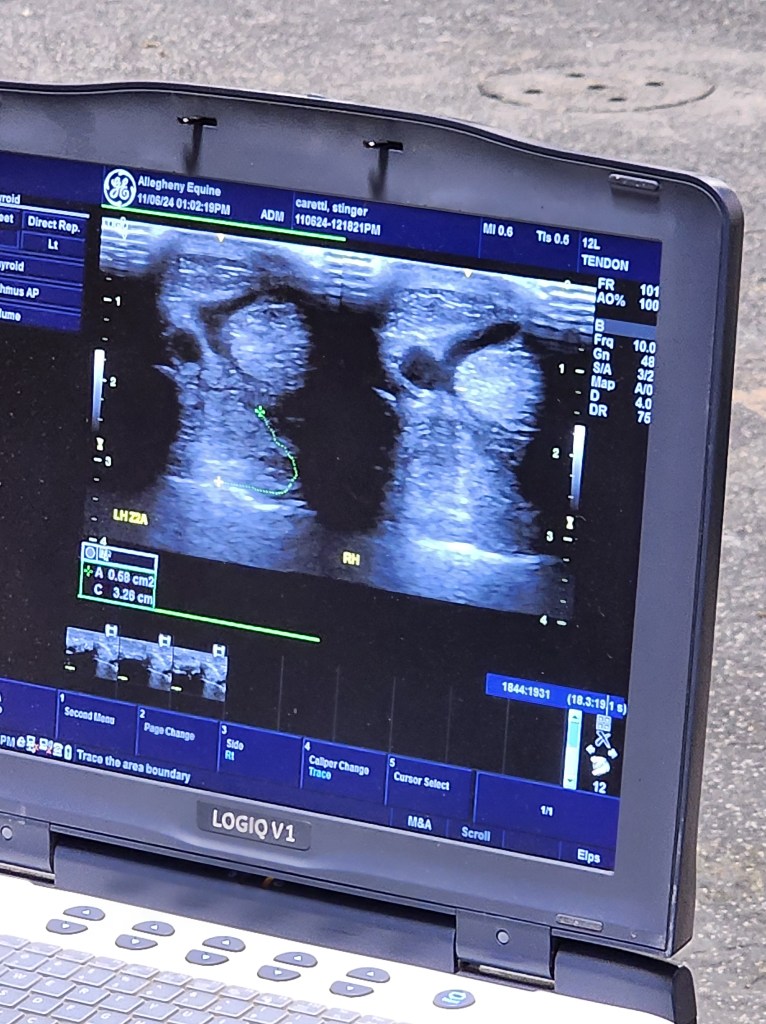
It ended up being four weeks from the initial injury until we got to the appointment on November 6th. We started off with a repeat lameness exam to see where the problem is. Because we knew he had hurt his hock, we opted to perform nerve blocks to see exactly where the problem was. After the first block in the fetlock, there was no improvement. The tarsocrural joint (large hock joint) was next with almost 80% improvement after 15 minutes. The next step was to ultrasound the hock and suspensory ligament. All the ligaments in the hock were normal, but the suspensory ligament was enlarged by 30% and had a tear, his hock joint also had some inflammation. I wasn’t sure what to expect when going to this appointment, I honestly thought maybe his hack was fractured. I just never thought it would be a suspensory tear. The unbelievable part was the vet did not think this was a new injury. We do think he just sprained his hock while he was playing but he didn’t cause the tear the month before. It just took this long to diagnose and his accident in the pasture just helped us finally find the problem. It also helps explain why we could ride at home and have no problems, but couldn’t complete a pattern at a show. Our ring is hard and rocky, with no loose dirt and we believe the deeper soft ground at shows was making him have pain and struggle to make a right turn.
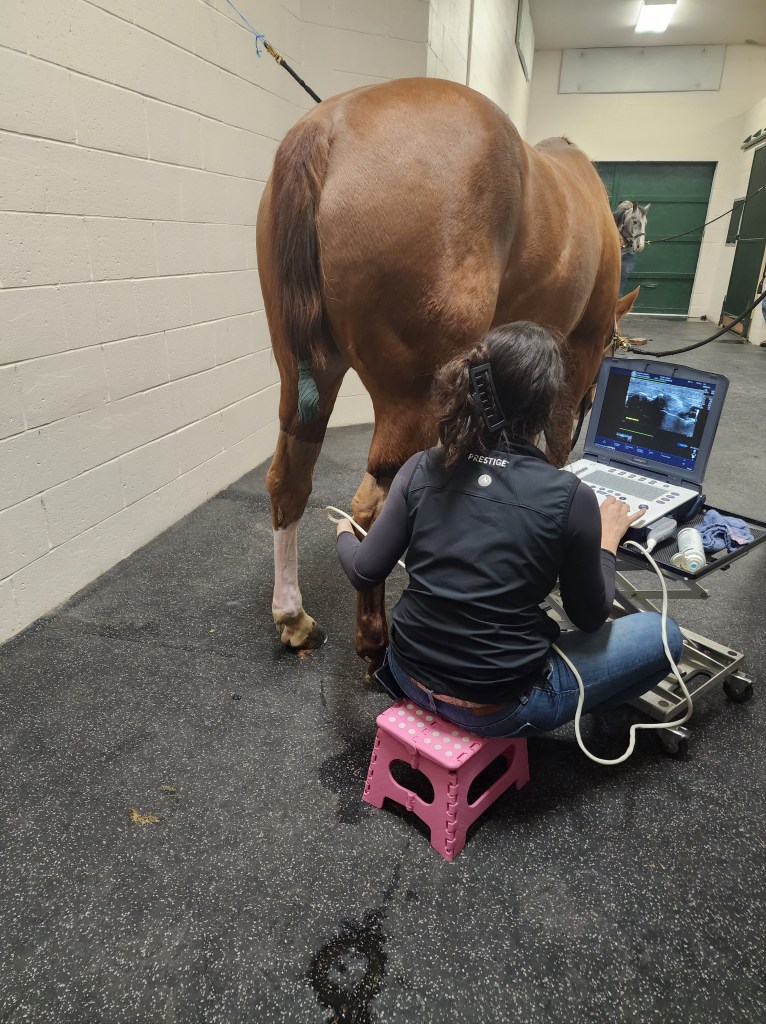


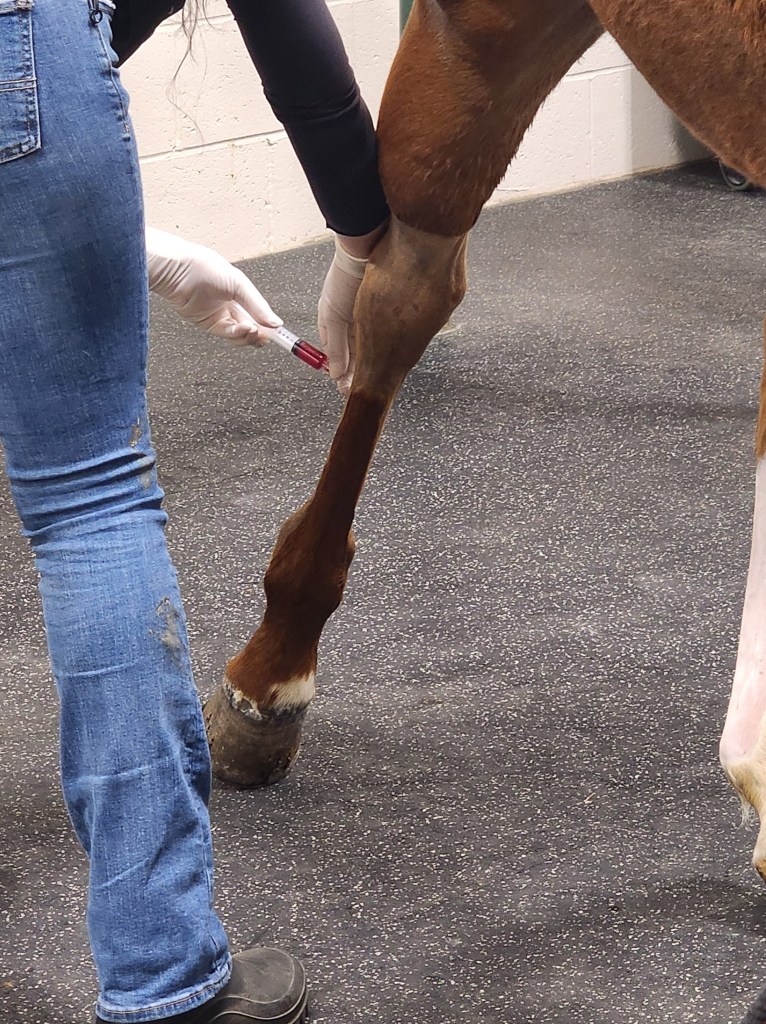
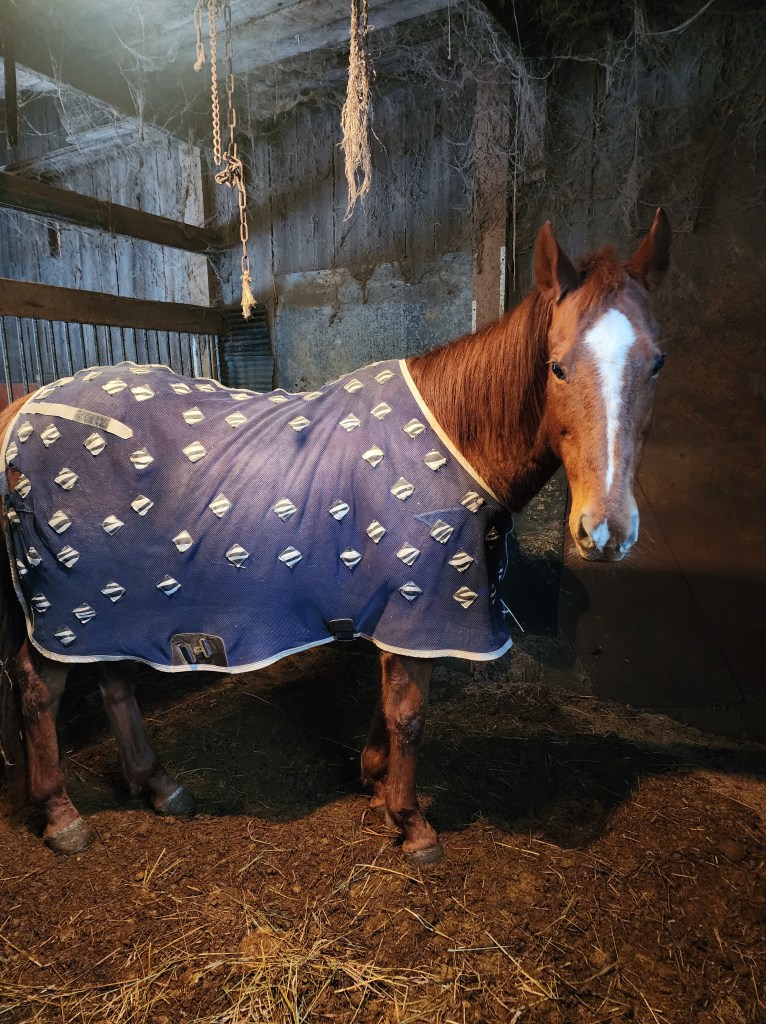
Now for the treatment plan. We opted to have a PRP injection and shockwave therapy while we were there that day. The PRP injection was cool to see, they took some of his own blood, spun it, and injected it back into his leg. The shockwave was really loud, but he was still sedated so it didn’t bother him. Since we live in Pennsylvania, we will do a series of shockwave treatments in the spring and then have him rechecked with another ultrasound. Until then, the vet recommended stall rest in a large stall (which we just happened to have built while fixing the barn, a weird coincidence) and shoes with heel extensions. I also bought him a red-light therapy boot, so I can put it on him at home a couple times a week to help with healing.


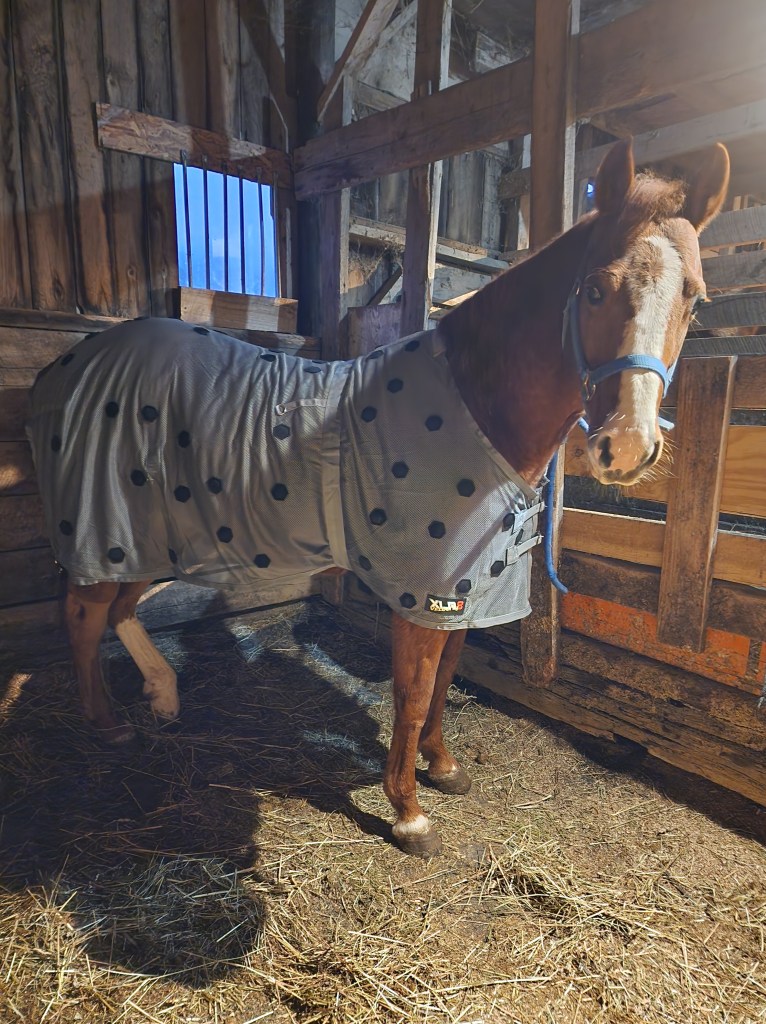
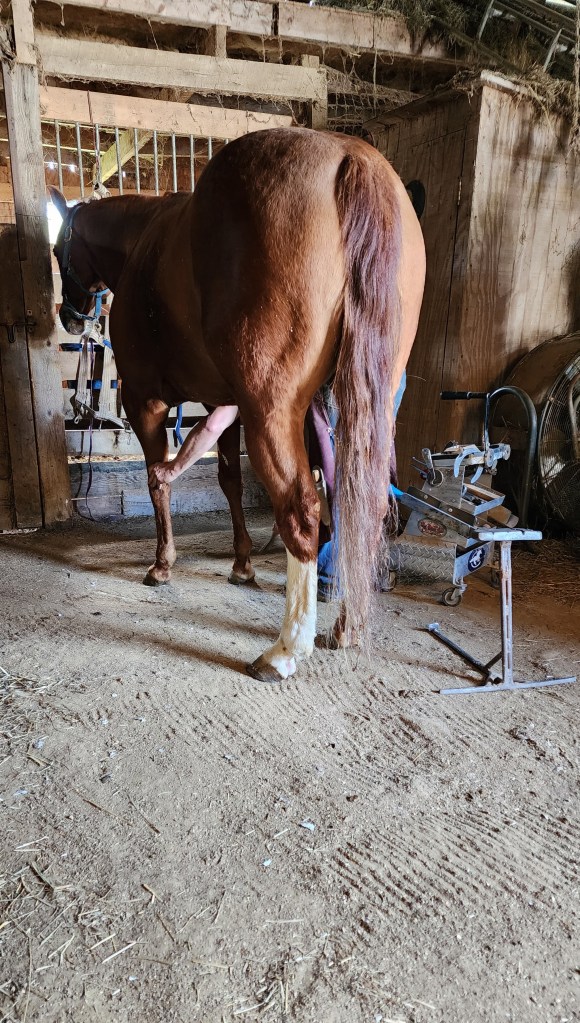
We spent a really long time there that day, but we finally had some answers. Right now, the vet is not optimistic that he will ever be competitive in barrel racing again, but I should be able to ride him again once he heals. He has been compensating for a while already and we think that’s why his stifle was locking and that it isn’t really the problem. Looking back, now that we know what his problem is, his behavior makes sense, and I wish we could have found it sooner. But for now, he will be on stall rest until further notice and will be pampered as much as he lets me. (We all know he is very opinionated.)
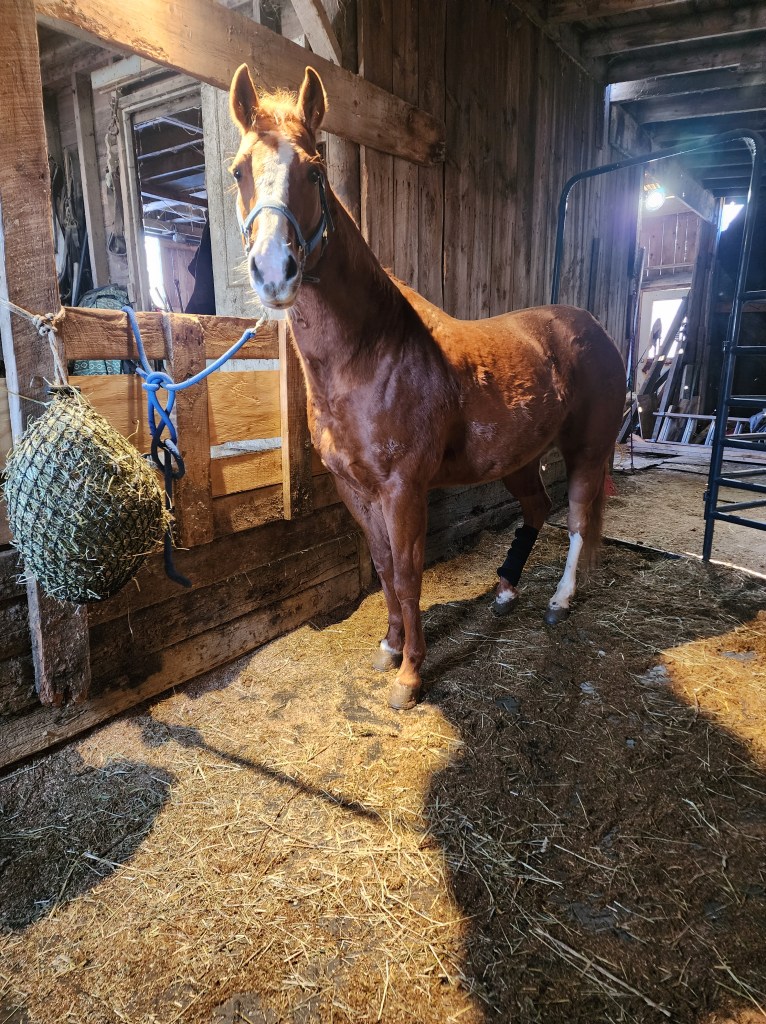
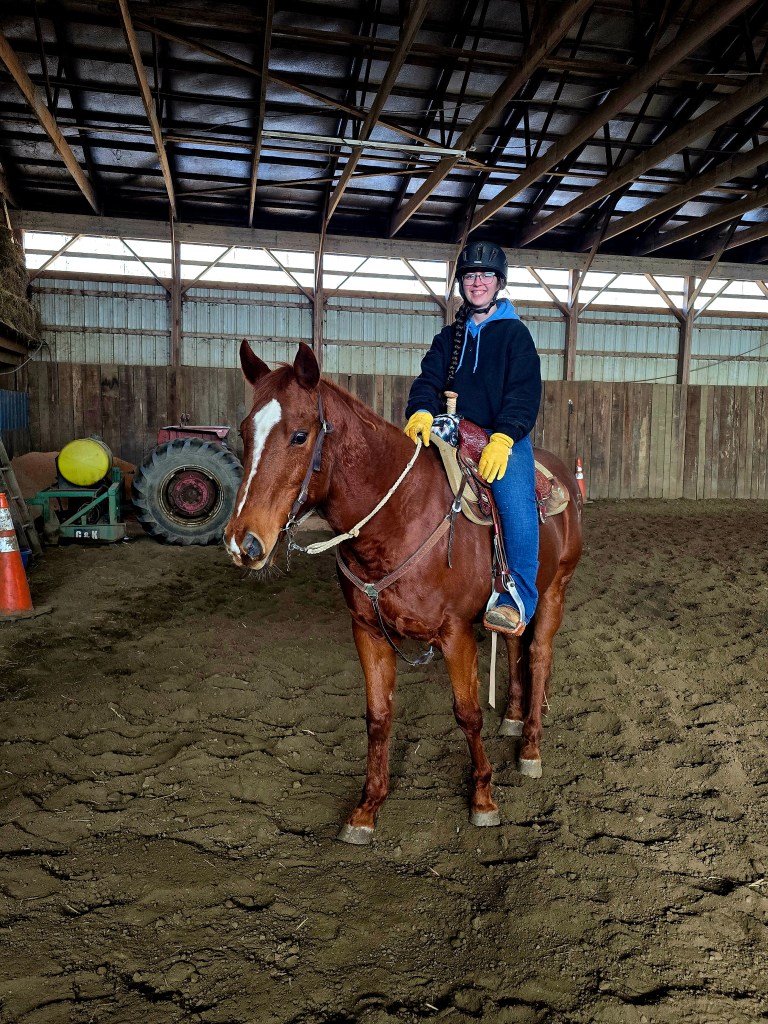
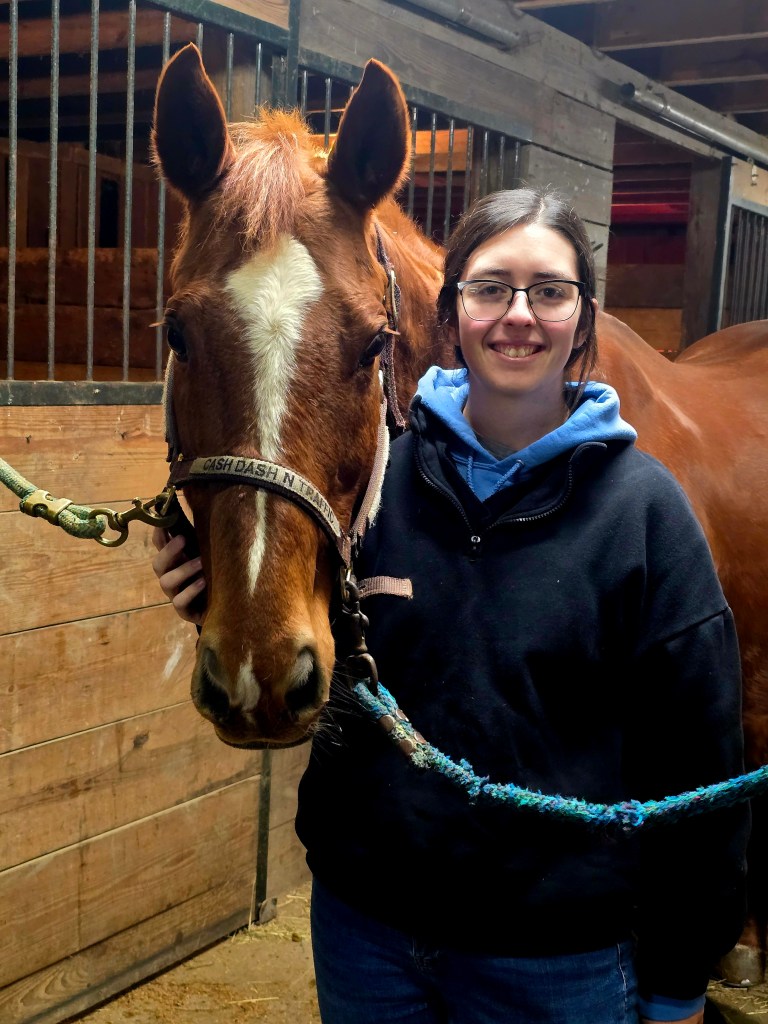
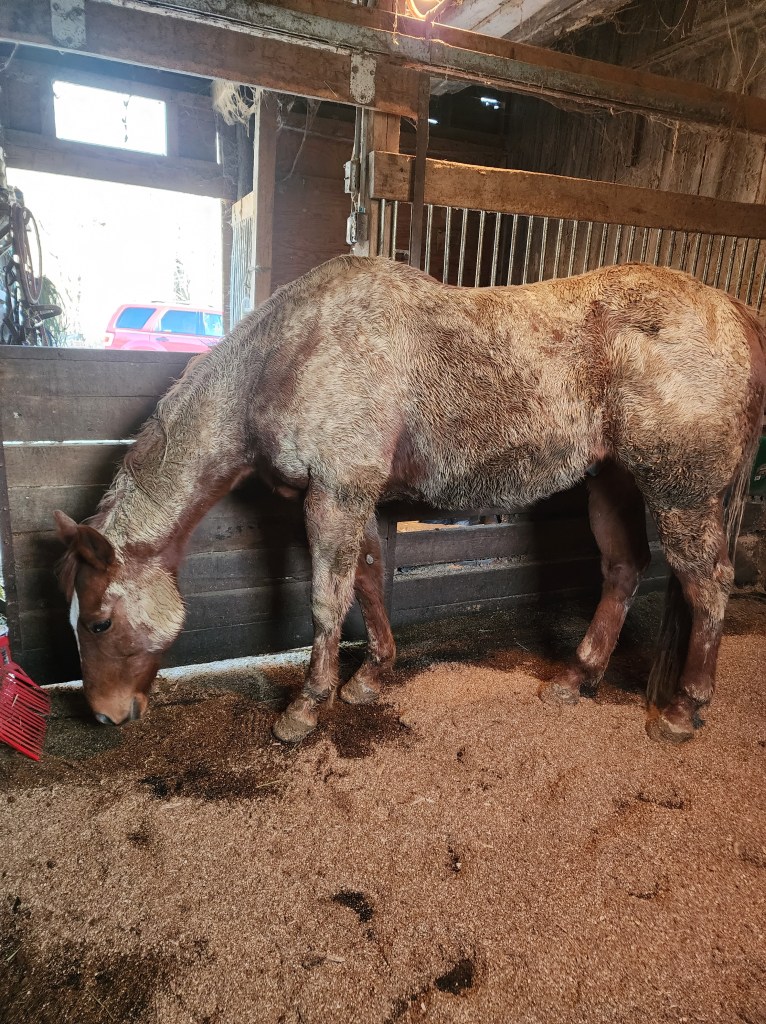
In the meantime, I have been continuing my search for another horse. The way everything has played out these past couple of months makes it seem like it was meant to be. Stinger got a brother on December 9th. His name is Cash Dash N Traffic AKA Reno. Apparently, we are a sorrel gelding family, but although he sort of looks like Stinger, his personality is quite the opposite. Reno is so sweet and chill and just goes with the flow, meanwhile Stinger is doing laps in his stall even though he is supposed to be injured. I’m definitely still getting used to how messy he is in his stall though because Stinger spoiled me with how clean he is. I am learning about what he likes and doesn’t, so far he very politely told me he does not like candy canes, but really likes carrots and apples. I can’t wait to see what we do in the future. Over the winter we will work on bonding and riding when the weather is nice, so we can be ready for rodeos in the spring.

 The Barrel Racer's Journal